


When it comes to rental property, vacancy is the silent killer of returns—every day your unit sits empty is income you can never recover. Even a small pricing misstep of $50–$150 can be the difference between leasing in 10 days versus sitting on the market for six weeks, resulting in thousands of dollars in lost rent.
The real challenge most landlords face isn’t the property itself—it’s strategic pricing and smart leasing execution. Avoiding costly vacancy requires pricing the unit correctly from the start, based not on a quick glance at a few Zillow listings, but on real-time comparables, market patterns, and expert-level leasing strategy. This is why working with a rental-focused leasing professional, rather than a traditional residential sales agent, is critical: they understand how to position, market, time, and price your unit accurately to maximize occupancy and revenue.
The key to avoiding costly vacancy: by pricing the apartment correctly from the beginning.
Why Pricing Matters So Much
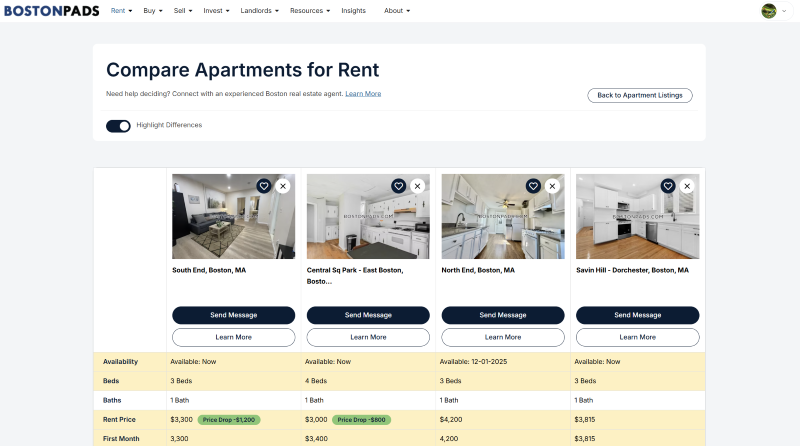
Tenants in today’s rental market are more informed than ever; they shop by comparison and know what they can get based on bedroom count and neighborhood. When property owners price their units too high, their listing becomes invisible because it gets ignored in favor of better-value options. On the other hand, pricing an apartment too low means leaving money on the table, possibly for the entire lease term.
The goal is to hit the market-right price where your listing generates multiple qualified tenant inquiries in a timely fashion. This way, you minimize days-on-market and maximize annual revenue. Finding the market-right price requires accurate real-time data; not guesswork.
The Power of Market Comparables and Price-per-Bedroom Analysis
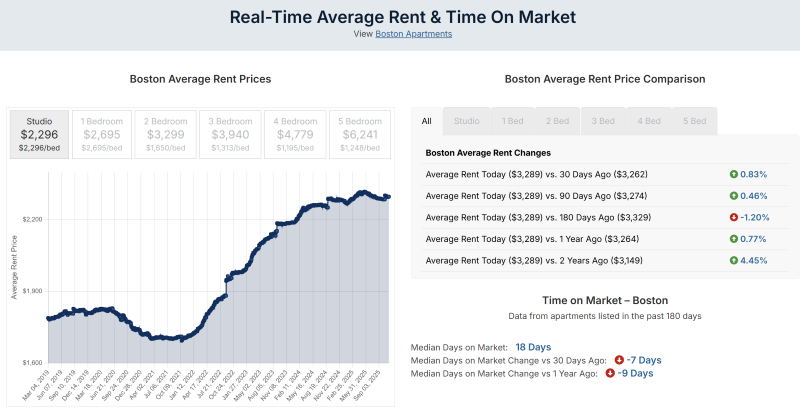
Effective pricing begins with accurate market comparables, but not just against what is listed currently, but also what has actually rented recently at similar size, quality, and location. One of the most accurate methods, ironically one that many landlords choose to skip, is a price-per-bedroom analysis. For example, if the average 3-bedroom apartment rents for $3600/month, then the price per bedroom is $1200/month. If the average 2-bedroom apartment rents for $3000/month, then the price per bedroom is $1500/month. Even in the same neighborhood, apartments are valued differently when analyzed on a per bedroom basis. This matters especially in densely-populated markets, zones that cater to student housing, multifamily buildings with frequent tenant turnover, and areas with roommate-based leasing demand, where landlords are more likely to rent on a room-by-room basis. Sales-focused agents rarely run this analysis, because it’s not taught in residential sales training; yet rental-focused leasing professionals use it daily. It is also important to note that nearly all residential sales agents do not have the deep database to run real time queries to actually help a landlord. In essence, working with a real estate agent that is focused on residential sales can be a recipe for low returns or much worse.

Why You Should Avoid Sales Agents for Rental Strategy
Although it may sound counter-intuitive, the worst candidates to hire when it comes to leasing your apartment are the traditional residential sales agents. Unlike multifamily leasing specialists who focus on renters and investors and treat rentals as their core business, the residential sales agents tend to focus on buying and selling only, don’t take rentals seriously, and rarely if ever give property owners and managers the service they need and deserve when it comes to leasing. Residential sales agents also are not very good at leasing paperwork. We have seen dozens of mistakes on the lease, lead law and addendums because it is not their core competency.
The Multifamily Leasing Specialist will use over 40+ rental aggregation and lead-generation platforms while the residential sales agent will only know MLS and basic listing sites. The Multifamily Leasing Specialist will strategically time listings based on seasonal demand while the residential sales agent won’t even be aware of the concept of lease-up cycles. Finally, the leasing specialist will be experienced with many different types of renters and rentals, including renting by the room, roommate matching, short term rentals, and subsidy programs to ensure that landlords have a smooth and streamlined experience.
Mismanagement, especially in terms of pricing, by a residential sales agent who treats rentals as on-the-side filler work can cost you tens of thousands per year, especially in markets where vacancy spikes outside peak leasing season. You might also be worried that their true intention is to want to sell the property rather than get it rented– and that the longer you stay vacant……. Well you might be able to figure out the rest.

Leasing Cycles Matter More Than Most Landlords Realize
Demand rises and falls in predictable patterns based on neighborhood and season; and pricing should move along in harmony. Examples of this may include how between May and September, there is peak turnover and higher rent velocity, and how between November and February features times of lowest demand, and may require price adjustments, additional incentives, or shifts in leasing strategy. Boston has very specific and unique apartment leasing cycles and you must know them precisely. A skilled specializing leasing agent times the listing to maximize exposure and demand, or adjusts lease lengths (10-, 14-, or 16-month terms) to align your next vacancy with the peak market; so that if you missed the mark this year, you can get back on cycle next year. This is how you avoid the dreaded February or December lease-up. Sales agents do not plan this way. Rental professionals do. Apartment leasing professionals understand how important it is to help a landlord achieve success. An apartment leasing agent in Boston is usually talking with a landlord several times per week – and you don’t see that often with sales agents.

Room-by-Room Leasing: A Powerful Tool Most Sales Agents Don’t Understand
In certain markets, renting a property by the bedroom can significantly increase revenue. For example, a 3-bedroom home that might rent for $3600 per month ($32,400 per year) as a standard unit could instead be leased by the room at $1,300 per bedroom, bringing in $3,900 per month ($46,800 per year). That’s an additional $3,600+ annually depending on utilities, furnishing, and management structure. However, this strategy only works when executed correctly: you need marketing channels specifically designed for room rentals, a strong pipeline of roommate groups, proper co-tenant screening processes, and a lease structure that clearly defines shared and private responsibilities. Most traditional residential sales and leasing agents don’t have experience with these nuances, but it’s something a dedicated rental specialist handles regularly if they have the right in-house software. Should you decide you want to rent by the room – you will want to seek out local rent by the room leaders that have developed software and ecosystems that get your room noticed by the widest audience in the shortest period of time.
When to Adjust Pricing After Listing
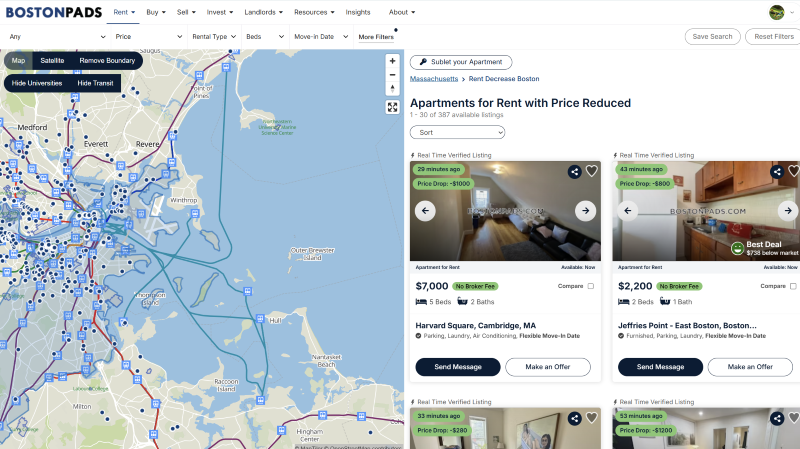
A smart leasing professional pays close attention to market response from the moment a listing goes live. They monitor inquiry volume, track the ratio of showings to applications, and compare listing impressions to actual engagement. If the property is getting online views but no showings, it’s usually a sign that the price or the photos need improvement. If the property is getting plenty of showings but no applications, the issue is typically pricing or perceived value relative to the competition. Renters often look at price reduced Boston apartments first. The first 7–14 days are the most important, this is when the market clearly signals whether your price and presentation are aligned with tenant expectations.
Remember: a properly-priced unit listed with a team that specializes in rentals should rent within 8-21 days depending on a host of neighborhood and time of year nuances.

The Bottom Line
Rental pricing is not about guesswork, it’s all about strategy. Choosing the right agent isn’t just a formality, it’s a financial decision. When you work with a licensed real estate professional who specializes specifically in leasing, you reduce vacancy time, maximize price-per-bedroom income, and time your leases to align with peak seasonal demand. You also gain access to stronger tenant pools, better marketing platforms, and screening practices that prevent costly mistakes. In multifamily real estate, every second and every dollar matters, and the right leasing specialist can be the difference between a property that simply fills units and one that consistently outperforms the market.

Kristian Kotov
Published November 12, 2025