

If you want to know what Boston’s housing future could look like in five years, just look to New York City.
Since the 2019 "Housing Stability and Tenant Protection Act" tightened rent-stabilization rules, an estimated 50,000 apartments across the five boroughs now sit empty — “ghost apartments” that landlords cannot afford to renovate and re-rent because the legal rent doesn’t even cover operating costs, let alone the price of a new kitchen or bathroom. That’s roughly 2.5% of the entire rental stock sitting dark in a city where the vacancy rate is already a crushing 1.4%.
One Manhattan landlord recently described the math on a Gramercy-area studio: after decades of below-market rent, the unit needed $50,000 in renovations. The 2019 laws allow him to permanently add only about $350 to the monthly rent for that work — pushing the legal maximum to roughly $1,230. Meanwhile, the average cost just to operate a pre-1974 rent-stabilized building in Manhattan is already $1,560 per month — and that’s before mortgage, taxes, or the new water/sewer rates. Result? The keys stay in the drawer, the refrigerator stays unplugged, and another apartment disappears from the market.
This isn’t an anomaly — it’s the predictable endpoint of price controls. To say that rent control is one of the dumbest and most useless “feel good” laws is the understatement of the century. Truth be told, there has never been one successful implementation of rent control across the nation. If there was a success story of rent control implementation in America – socialists and other non-logical thinking people would have already been touting its successes. You can look far and wide across the internet but you will never see an article on how rent control increased housing production and made housing safer or better. What you are much more likely to find is that rent control did nothing to bring down rental costs but instead made people leave their state and go find better housing in more supply side focused states. There are hardly any people in America that want to live in overpriced apartment housing – but there are even fewer that want to overpay for dilapidated and outdated housing which is where rent control always ends up. That is why rent control gets repealed; because people eventually come to realize that a landlord is often hamstrung to make the necessary repairs and updates so that people actually want to live in the unit.
Young, bright people are especially mobile now through the use of the internet and often travel quite a bit throughout the country. It is very easy now to look up rental pricing across the country and they can easily see what they can get in other locations. It doesn’t take a genius to figure out that cities and states that focus on production of market rate units attract smart talent. If Massachusetts wants to retain the best young talent in future years, then it is imperative that 95% of our politicians focus should be on reducing barriers to development. Once legislators get serious about removing impediments to development – then our housing costs will go down rapidly.

The Same False Playbook Being Pitched in Boston
In Boston, some housing activists and elected officials are pushing versions of the same erroneous rent control ideas: cap rent increases at arbitrarily low levels, expand the universe of “stabilized” units, and treat market-rate housing as a public utility subject to political control. While there are serious constitutional private property ownership problems with this type of thinking – we will save that for another article. Mayor Wu’s previous rent-stabilization proposal (a 6% + CPI cap, max 10%) may be on ice for now, but the pressure hasn’t gone away — especially as state lawmakers continue to file home-rule petition after home-rule petition. Price and wage controls simply do not work. There is also the issue of specifically targeting local Massachusetts landlords, while universities keep increasing room and board costs at a staggering rate. Why haven’t dorm or tuition price controls been applied to Colleges and Universities in MA? Everyone knows colleges don’t pay taxes but continue to drive up housing costs as they gobble up more and more real estate in Massachusetts. As colleges increase their footprint it puts a strain on local landlords to make the difference up – that doesn’t seem remotely fair. To force local landlords to pay additional taxes and suffer through rent control while colleges keep increasing dorm and tuition pricing is unethical at best.
Let’s talk about New York and how that state is doing under rent control. The New York experience shows exactly where that road leads:
- Landlords warehouse units rather than lose money every month. Lower supply drives up costs.
- Renovations stop; buildings deteriorate. People leave your state – NY is losing population to other states.
- The controlled units that remain on the market disproportionately benefit long-term tenants (often higher-income) while newcomers and lower-income families are locked out.
- Market-rate and new-construction rents skyrocket even faster to compensate for the shrinking usable housing stock.
We’ve seen this movie before — in Cambridge (pre-1994), in San Francisco, in Berkeley, and now in the most dramatic fashion in New York City. Where are the success stories of rent control? Math is math. Listening to people say “this time rent control will be different” obviously did not do well in fundamental economics courses or perhaps were calculator challenged. To repeat – math is math. Costs are costs. Inflation is inflation. That is why you keep seeing tuitions going up across the country but you are not seeing tuition price freezes or other forms of wage and price controls. The only solution to getting rent prices down is to look at other cities and how they create more housing opportunities and mimic those success stories. Many people have pointed to how Austin, Texas has decreasing rents as supply booms. Perhaps it is time for our politicians to have a field trip to Austin to study how to rapidly create supply?

Broker Fees Are a Symptom, Not the Disease
Some Boston activists have also trained their fire on broker fees, demanding that landlords — not tenants — pay the full commission in every transaction. New York City tried something similar in 2020 (before courts partially rolled it back), and the result was predictable: many brokers simply stopped showing rent-stabilized or lower-rent listings altogether because the economics no longer worked. Tenants in the very units activists claimed to protect- suddenly found fewer options and longer search times. Nearly all real estate agents in America are independent contractors that work long and random hours seven days a week – and you have to factor in fuel and maintenance costs of vehicles. Vehicle and car maintenance prices have skyrocketed over the years so it makes sense that brokers and agents in New York modify their strategies of making money because they have their own bills and families to support.
Broker fees aren’t the reason rents are high. Chronic undersupply is the reason rents are high. When the real-time availability rate across Greater Boston is at 2.35% and the vacancy rate is 1.63%, tenants will compete aggressively for every apartment that hits the market — and someone is going to pay the broker who brings the deal together. Shifting that cost from tenant to landlord mostly means the landlord builds the fee into the advertised rent. The tenant still pays; they just don’t see the line item. The way to lower rents and reduce broker fees for tenants is massive supply. Nearly every developer in MA complains that the high affordability unit requirements stifle the ability to get projects off the ground. No bank will finance a deal that doesn’t make sense. Again, real estate development is not rocket-science, quite the contrary, it's mostly basic math. Very simply put, you add up the monthly mortgage, cost of construction, carrying costs vs. the potential rent roll and you either see a profit or a loss. Banks now have powerful AI number crunching software that can quickly do estimates on whether a project has viability and make loans or not accordingly. Every landlord and bank knows that 20 percent affordability requirements make the deals nearly impossible to pencil. In essence, affordability requirements halt or slow down a lot of projects coming to fruition. Clearly going back to zero or low affordability requirements would have a profound effect on pent up demand to build more and thus bring down rents. All this being said, rent control is NOT the answer. Supply and a keen focus on legislators helping and/or getting out of the way of the free market is the most viable solution to better quality of housing at lower price points.
The Proven Path: Build More Housing, Faster
History is remarkably consistent: the only thing that has ever brought rents down in a sustained way is increasing supply faster than demand grows. Do a google search and you will find countless success stories. In fact, you will probably get bored after reading all of them for an hour or so. Can you find any rent control success stories?
- Minneapolis rejected strict rent control in 2021 and instead focused on zoning reform and permitting streamlining. Result: a surge in new units and the first sustained rent decline in years.
-
Saint Paul went the opposite direction with a 3% hard cap. Building permits collapsed more than 80%, investors fled, and rents kept rising anyway. How is their overall economy doing? Are people moving to rent controlled cities in droves?
Boston doesn’t need another useless bureaucratic layer of price controls. We need:
-
City of yes-style zoning reform that legalizes modest density citywide (6 stories as-of-right in most neighborhoods). Think shiny new buildings with features and layouts that everyone wants!
-
Faster, cheaper permitting — cut the average multi-family approval timeline from years down to months. Better software and AI can help this happen fast.
-
Expansion of the ADU program and incentives to add bedrooms to the 30,000+ two- and three-family homes across the city. Let all landlords across the state regardless of whether they live there or not, add ADU’s. Supply is Supply. All supply is good!
- Tax incentives for owners who bring long-vacant or under-utilized units back online. Make a keen focus on helping struggling landlords find a path to delivering more supply for the greater good.
Every month we delay these reforms, we move closer to New York’s 50,000 ghost apartments. Are ghost apartments what we want? Or do we want our next generation of business leaders to stay here and build our tax base? Do we want our future superstars to leave for more business friendly and housing oriented states?
Final Thought
New York’s 2019 laws were sold as the strongest tenant protections in America. Six years later, the city has fewer usable apartments, deteriorating buildings, and higher market-rate rents than ever. Is New York thriving or are more people leaving the state? What does it say about the state of New York if their people are leaving? Do people vote with their feet? Would New York benefit by a shift in supply thinking? Boston is not immune to bad ideas just because we’re 215 miles away. Math is math. Policies have consequences.
If we want a city where teachers, nurses, young families, recent graduates, and everyone can still afford to live, we have to reject the failed experiments of the past and focus on the one policy that has ever worked: build far more housing, and let supply do what price controls never can.
The choice is ours — but New York just showed us exactly what happens if we choose wrong.
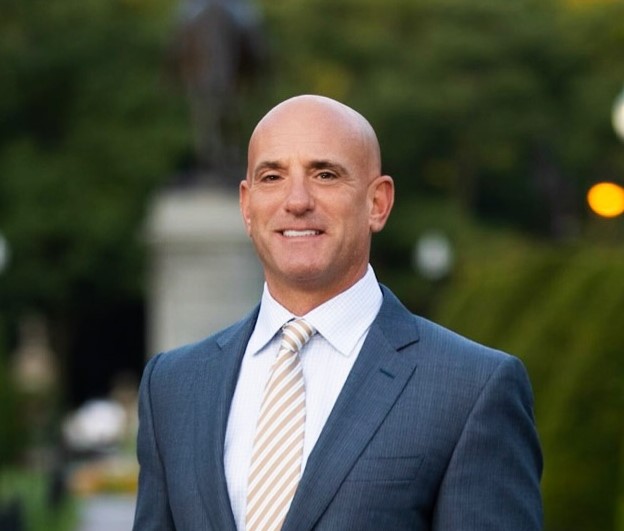
Demetrios Salpoglou
Published December 30, 2025
Demetrios has pulled together the largest apartment leasing team in the Greater Boston Area and is responsible for procuring more apartment rentals than anyone in New England – with over 130k people finding their housing through his services. Demetrios is an avid real estate developer, peak performance trainer, educator, guest lecturer and motivational speaker.